Heed the dengue warning
5 days ago - Columnists
Opinion | Columnists
By Admin User
Jul 1, 2026 - 2 min read
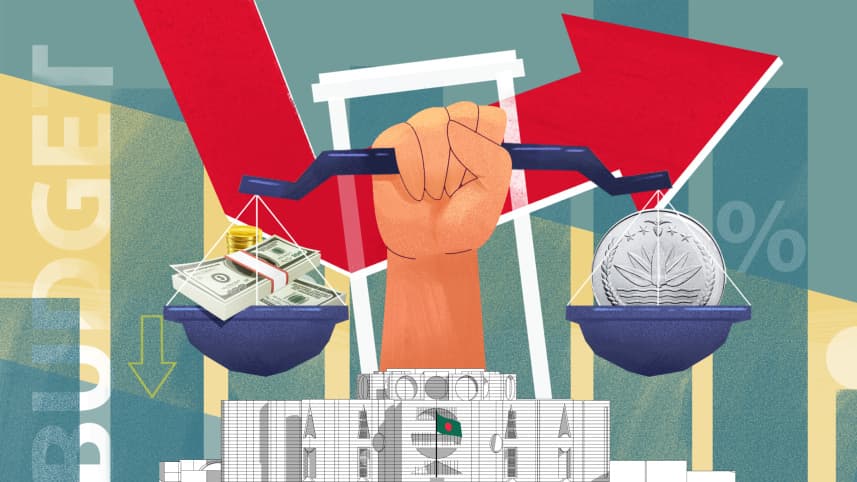
<div>The proposed national budget for FY2026-27 provides an indication of the newly elected government’s economic philosophy and development priorities. It identifies 10 priority areas, including investment-led growth, quality education and healthcare, universal social protection, financial sector stability, energy security, digital transformation, environmental management, and accountable institutions, which are broadly consistent with the country’s development needs. However, whether the proposed fiscal framework, macroeconomic assumptions, and implementation capacity are sufficient to translate these ambitions into tangible outcomes is the real question.</div><div><br></div><div><br></div><div>The new budget projects a GDP growth of 6.5 percent in the upcoming fiscal year, a sharp rise from the revised estimate of five percent for the outgoing year by the finance ministry, and the provisional estimate of 4.14 percent for the same period by the Bangladesh Bureau of Statistics (BBS). Achieving such a significant improvement in a single fiscal year would require an exceptionally strong rebound in investment, industrial production, and exports. This target appears ambitious as private investment, the main driver of economic growth, is projected to increase only marginally—from 21.22 percent of GDP in FY2025-26 (revised) to 21.33 percent in FY2026-27—after remaining stagnant for more than a decade. Although public investment is expected to rise from 10.8 percent (revised) to 13.1 percent of GDP, achieving the growth target will ultimately depend on a stronger recovery in private investment.</div>
<div><div>The inflation outlook presents a similar challenge. The government aims to reduce inflation to 7.5 percent in FY2026-27. However, during the July-May period of FY2025-26, the moving average inflation was 8.63 percent. In Bangladesh, inflation has increasingly become structural rather than purely monetary. It reflects supply-side bottlenecks, high food prices, energy costs, exchange rate adjustments, and persistent market inefficiencies. Bringing inflation down will, therefore, require more than a tighter monetary policy, depending equally on ensuring adequate food supplies, improving energy availability, maintaining exchange rate stability, reducing supply chain disruptions, and strengthening market oversight.</div><div><br></div><div>The projection for private sector credit growth also warrants careful scrutiny. The proposed budget expects private credit growth of 9.4 percent in FY2026-27, despite actual growth being 4.75 percent as of April 2026. Weak business confidence, cautious bank lending, and financial sector stress continue to constrain credit demand and supply alike. Unless confidence improves significantly, higher credit growth may prove difficult to achieve.</div></div>