Behind the curtains of Mahtim’s melody
5 days ago - Entertainment
Entertainment | Movies
By Admin User
Jul 1, 2026 - 3 min read
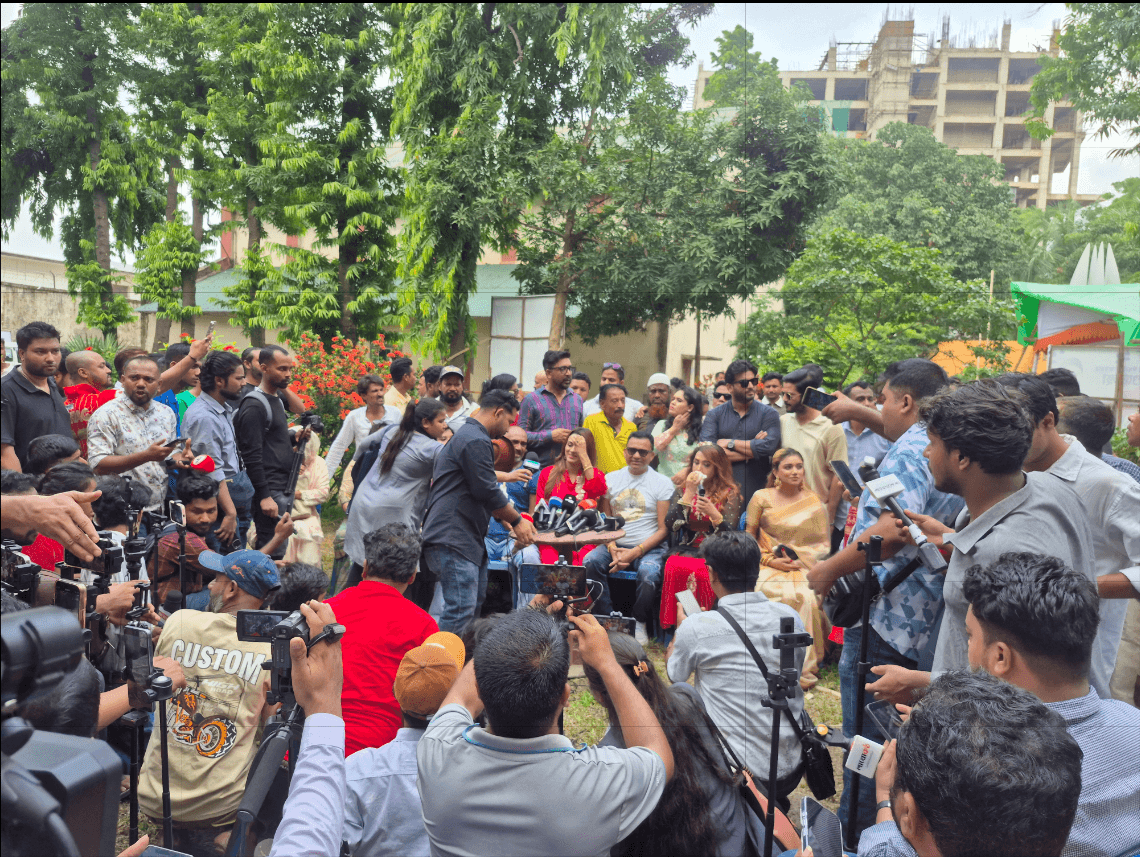
<span style="color: rgb(71, 84, 103); font-family: "IBM Plex Serif", serif; font-size: 13.6px;">Fire service officials, journalists, and onlookers gather at the site in Armanitola, Dhaka, where an earthquake claimed three lives on November 21, 2025. </span><em style="border-color: currentcolor; color: rgb(71, 84, 103); font-family: "IBM Plex Serif", serif; font-size: 13.6px;">Photo: Palash Khan/Star</em>
<div>In this year's election, Arman and Rumana Islam Mukti are contesting the posts of president and general secretary from one panel, while Shiba Sanu and Joy Chowdhury are leading the rival panel. The election is scheduled to be held on July 3.</div>
<div><font color="#28303b" face="IBM Plex Serif, serif">The BFDC is currently buzzing with election activities as candidates and their supporters gather on the premises every day to campaign. While the election has brought renewed activity to the country's film hub, many industry insiders note that neither panel features many prominent star artistes this time.</font></div><div>This is where the comparison becomes uncomfortable. In Japan, primary schools hold earthquake drills as routinely as fire drills, sometimes several times a year: children drop under their desks, head first, hold the legs until the shaking stops, then file out for a roll call, some rotating through simulation rooms that recreate real tremors until the response becomes physical memory rather than instruction. The share of Japanese school buildings rated earthquake-safe rose from under half in 2002 to nearly all of them today, retrofit by retrofit, after the 1995 Kobe earthquake destroyed thousands of schools and made the case impossible to ignore. In California, the Great ShakeOut has grown into the largest earthquake drill in the world, with students practising Drop, Cover, and Hold On at least once a year until it needs no announcement to trigger. In the Philippines, on the Pacific Ring of Fire, school drills are conducted with the same seriousness as fire drills: routes are posted in every classroom, roll call is completed within minutes, and calm is treated as a skill to be practised rather than hoped for. On the ground itself, the outlook is no steadier. Soil surveys of Dhaka show well over half the city sitting on land rated as highly susceptible to liquefaction: soft, waterlogged, often artificially filled ground that can briefly behave like liquid under strong shaking, much of it reclaimed from wetlands and ponds within living memory. Add to that the thousands of buildings raised with open, unsupported ground floors for parking, many without the piling the national building code requires. One recent structural assessment estimated that a magnitude-6.9 earthquake in Dhaka could collapse more than 860,000 buildings. After November’s quake, engineers called for urgent structural checks across the capital’s roughly 2.1 million buildings, a task that has barely begun.</div><div><br></div><div>None of this is unknown; it has been mapped, modelled, and, since November, publicly demonstrated. What is still missing is the rehearsal itself: not a single briefing, but the kind of repetition that turned cyclone response into instinct: a duck-and-cover drill run every term until no child has to think about it, alongside the retrofitting that makes the building they are ducking inside less likely to come down on them. Neither carries the urgency of a storm signal, because neither answers a threat that most people alive today have lived through more than once.</div>
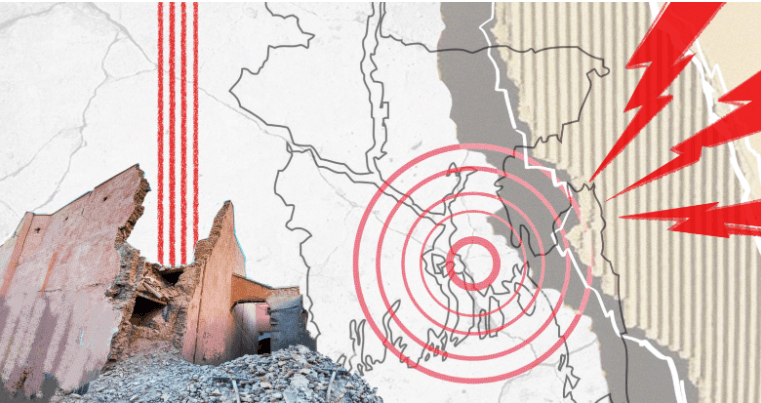
At 10:38 in the morning on November 21 last year, the ground shook for 26 seconds. The epicentre was near Madhabdi in Narsingdi, not far outside Dhaka. By the day’s end, at least ten people were dead and hundreds were injured. A railing collapsed onto pedestrians buying meat in Old Dhaka. A wall came down on a mother and her newborn in Narayanganj. University dormitories cracked. Panicked students jumped from residence halls. Power stations shut down. It was, by most measures, the deadliest earthquake to strike Bangladesh in more than two decades and, by regional standards, it was still considered moderate.